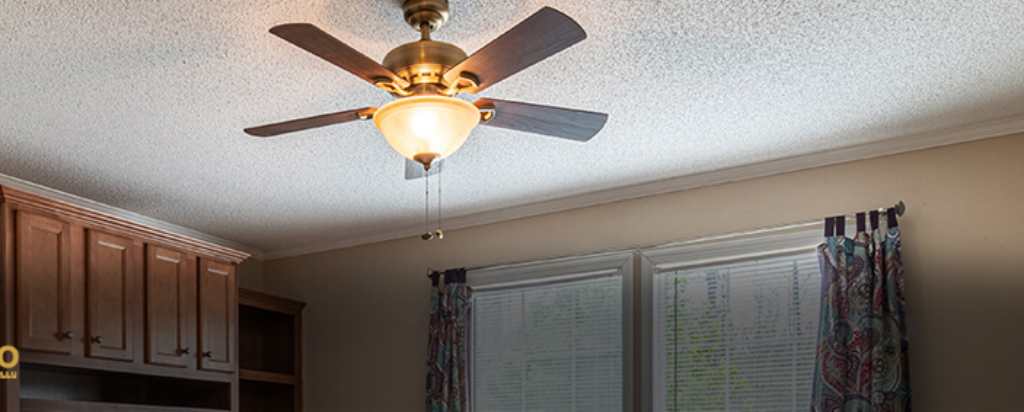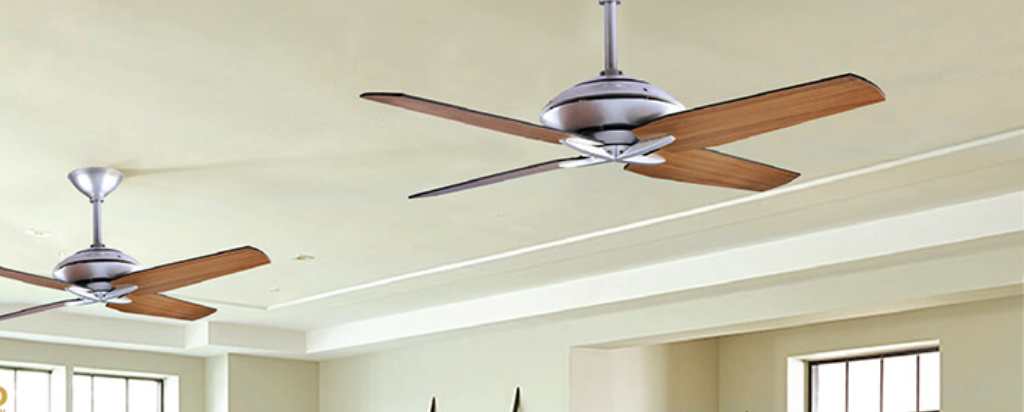
Most people don’t think about their ceiling fan.
It’s just there. It runs. It does its job. You switch it on and forget about it.
But when you start designing a space properly, everything changes. You begin to notice things you never paid attention to before. The silence in a bedroom. The way air moves in a living room. Even how a ceiling looks when everything else has been carefully chosen.
That’s usually the point where the question comes up.
Does the fan matter?
From what we’ve seen, it does. More than most people expect.
Let’s Start Simple. What Actually Is a BLDC Fan?
If we strip away all the technical language, the difference is quite straightforward.
A regular fan uses an older kind of motor. It has internal parts that touch, create friction, and over time, lose energy in the process.
A BLDC fan doesn’t work like that. It runs on a different system where there’s no physical friction inside the motor.
What that means for you is simple.
Less energy is used. Less heat is generated. Less noise.
A typical fan will run somewhere around 70 to 80 watts. A BLDC fan will usually sit closer to 30 watts.
On paper, that looks like a number.
In real life, especially in homes where fans run for hours every day, or in hotels where they run across dozens of rooms, that difference builds up quietly in the background.
The Part No One Talks About Enough: How It Feels
Specifications are one thing. Living with something every day is another.
You’ve probably heard the faint hum of a fan at night. Not loud, but present. Or that slight wobble that becomes noticeable once you notice it.
In a normal setting, you ignore it.
In a well-designed space, you don’t want to.
BLDC fans feel different because they run differently. There’s no internal friction, so the movement is smoother. The sound almost disappears.
It’s one of those things you don’t notice immediately. But once you do, it’s hard to go back.
Especially in bedrooms. Or spaces meant to feel calm.
Control Has Quietly Changed Everything
A few years ago, controlling a fan meant a wall regulator. That was it.
Now, people expect more. Not because it’s a luxury, but because it’s become normal.
You walk into a room and adjust things without thinking too much about it. Lights, temperature, devices. Everything responds.
Fans are catching up to that.
With BLDC fans, control is no longer limited to a switch. You can adjust speed from your phone. Use a remote. Even connect it to voice control if that’s how you prefer to operate your home.
For homeowners, it’s convenient.
For hotels or villas, it becomes something more. You can manage multiple rooms without physically being in them. You can reduce unnecessary usage. You get a level of control that didn’t exist before.
It’s not flashy. But it’s useful.
Where This Actually Starts to Matter
Not every room needs a design decision around a fan. That’s true.
But some spaces do.
Living rooms, for one. They’re used constantly. The fan becomes part of the environment, whether you realise it or not.
Bedrooms matter even more. Airflow, sound, consistency. These things affect how well you rest.
In hospitality spaces, the difference becomes clearer. Guests don’t point out the fan. But they remember how the room felt.
Too much noise. Uneven airflow. It adds up.
Good design is often about removing discomfort rather than adding features.
The Real Comparison, Without Overcomplicating It
A conventional fan does what it’s supposed to do. It moves air. It’s familiar. It works.
But it consumes more power. It makes more sound. It gives you limited control.
A BLDC fan does the same job, just more efficiently. Quieter. Smoother. With more flexibility in how you use it.
That’s really the difference.
Not dramatic. But noticeable over time.
If You’re Choosing One, Here’s What We’d Actually Check
We’ve seen people focus too much on surface details and miss what really matters.
Start with the motor. It should be genuinely BLDC, not just labelled that way.
Look at the wattage. If it’s not significantly lower than a regular fan, it defeats the purpose.
Check how it connects. Built-in WiFi is simpler. No extra devices, no complications.
Then look at the design. This part matters more than people think. A fan sits in the most visible part of the room. It shouldn’t feel like an afterthought.
And finally, make sure there’s proper support. Service matters, especially for something that runs every day.
At The Fan Studio, this is exactly where we spend most of our time. Getting the balance right between how a fan performs and how it fits into a space.
Because one without the other doesn’t really work in a well-designed home.
So What Actually Belongs in a Luxury Space?
We don’t think luxury is about adding more.
It’s about removing what doesn’t feel right.
Noise that shouldn’t be there. Designs that don’t fit. Systems that feel outdated.
A conventional fan isn’t wrong. It’s just built for a different kind of expectation.
A BLDC fan aligns better with how spaces are being designed today. Quieter environments. Better control. More attention to detail.
That’s really what it comes down to.
One Last Thought
The ceiling is easy to ignore because it’s not at eye level.
But it’s always there. Every time you walk into a room, every time you sit down, every time you rest.
What you place there matters more than you think.
At The Fan Studio, we look at ceiling fans a little differently. Not as something you add at the end, but as something that should feel like it belongs from the beginning.
Because when everything comes together properly, you don’t notice the fan.
You just notice the space feels right.