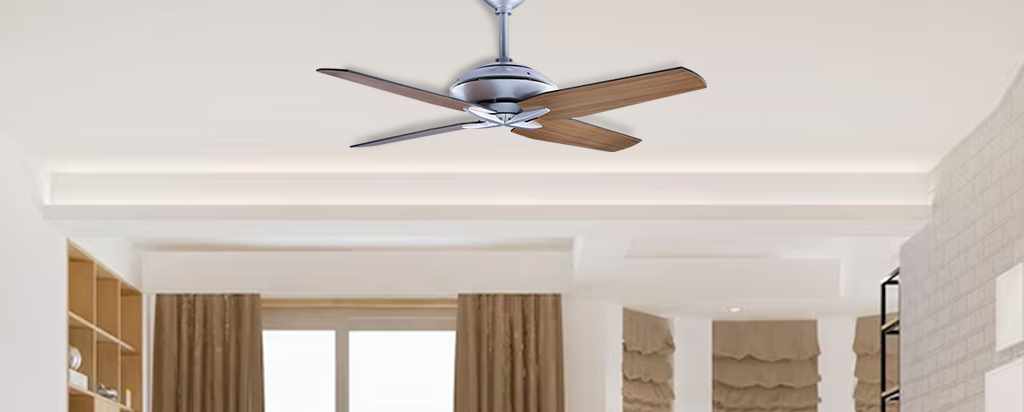
Best Ceiling Fans for Low Ceilings in India: Hugger Fan Guide
Have you ever walked into a beautifully designed room and felt that the ceiling fan was making the space look smaller? Or wondered whether your 8-foot ceiling could accommodate a stylish ceiling fan without making the room feel cramped?
You are not alone. Many Indian apartments, compact bedrooms, older homes, and studio spaces have relatively low ceilings. In these rooms, choosing a ceiling fan is not just about airflow. It is also about headroom, proportions, safety, and how well the fan fits into the overall interior.
This is where a hugger ceiling fan can make a difference.
Designed to sit close to the ceiling, hugger fans offer a practical solution for rooms where a conventional ceiling fan may hang too low. And the best part? You do not have to settle for a basic design just because your ceiling height is limited.
In this guide, we will explore what hugger fans are, how they differ from regular ceiling fans, what to look for when buying one in India, and how to choose the right model for your home.
What Is a Hugger Ceiling Fan?
A hugger ceiling fan, also called a flush-mount ceiling fan or a low-profile ceiling fan, is designed to sit closer to the ceiling than a conventional fan.
Traditional ceiling fans are often installed using a downrod, which creates a gap between the ceiling and the motor. Hugger fans typically use a more compact mounting arrangement to reduce this distance.
The result? Less downward projection, more usable headroom, and a cleaner visual appearance.
Imagine a bedroom with an 8-foot ceiling. A standard fan with a long downrod might feel visually dominant, particularly if the room is compact. A low-profile fan can help maintain a more open feel while providing air circulation.
However, there is one important distinction: not every compact ceiling fan is a hugger fan. The actual distance between the ceiling and the fan blades depends on the model and its mounting design. Always check the manufacturer’s dimensions before buying.
If you are exploring designs specifically made for this purpose, browse The Fan Studio’s hugger fan collection.
Why Are Hugger Ceiling Fans a Smart Choice for Low Ceilings in India?
Indian homes come in many shapes and sizes. From compact city apartments and guest bedrooms to studio flats and renovated older properties, ceiling height can vary considerably.
In rooms with limited vertical space, the right fan can improve both everyday comfort and the way the room looks.
Here is why a hugger fan deserves consideration.
1. More Headroom Where It Matters
The most obvious advantage of a hugger fan is its low-profile installation.
When a fan sits closer to the ceiling, it reduces how far the assembly projects into the room. This can be particularly useful in bedrooms, compact living rooms, and other spaces where people move around beneath the fan.
That said, the actual clearance depends on the fan’s blade position, ceiling height, and mounting arrangement. A hugger design does not automatically guarantee adequate clearance.
Before making a purchase, measure the distance from the finished floor to the lowest part of the installed fan. Confirm that the installation meets applicable safety requirements and the manufacturer’s instructions.
2. A Less Cluttered Look
Low ceilings can make a room feel visually compressed, especially when large furniture, heavy lighting fixtures, and bulky ceiling fittings compete for attention.
A flush-mount ceiling fan can create a more streamlined appearance by reducing the visible gap between the fan and ceiling.
This works particularly well in minimalist bedrooms, contemporary apartments, compact home offices, and rooms with simple ceiling designs.
The goal is not to make the fan disappear. It is to ensure that it complements the room rather than dominating it.
3. Practical for Compact Bedrooms and Apartments
In a small bedroom, every design decision influences how spacious the room feels.
A low-profile fan can be a sensible choice when a conventional downrod installation would hang uncomfortably low. It can also work well in guest bedrooms, study rooms, and compact urban homes.
However, do not choose a fan based on mounting height alone. The blade span must also suit the room, and the fan should have enough unobstructed space around it.
For smaller homes, it can be helpful to consider the entire cooling layout. In rooms where ceiling installation is impractical, a wall fan may be an alternative worth exploring. Our guide to creative ways to use wall fans in small apartments offers more ideas for making limited space work harder.
4. Style Without Unnecessary Bulk
There is a common misconception that low-ceiling rooms require plain, purely functional fans.
That is not necessarily true.
A well-chosen low-profile fan can complement a range of interior styles, from understated modern spaces to warm, design-led bedrooms. The right finish, blade shape, colour, and overall proportions can make the fan feel like a considered part of the interior.
If aesthetics are high on your priority list, explore The Fan Studio’s modern fan collection for design inspiration.
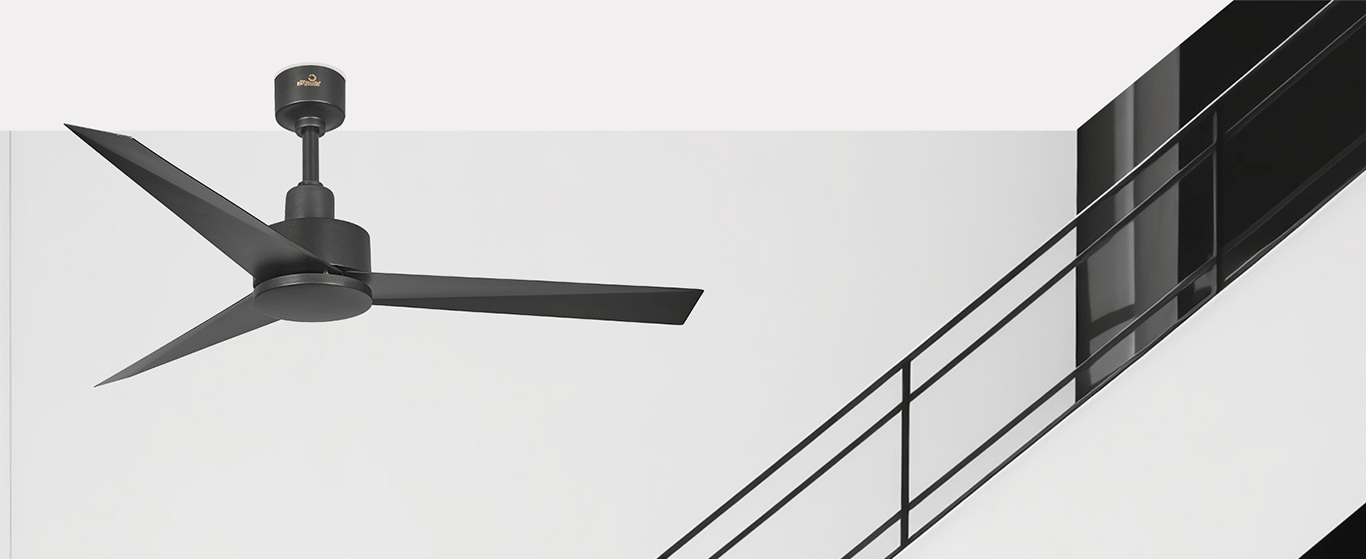
How to Choose the Best Ceiling Fan for an 8-Foot Ceiling
If you are looking for the best ceiling fan for low ceiling rooms, start with measurements rather than appearance.
An 8-foot ceiling is approximately 2.44 metres high. That leaves less vertical room for the fan assembly than a taller ceiling would.
Here are the factors to check before you buy.
1. Check the Installed Height, Not Just the Product Photo
Product images can be misleading. A fan may appear compact in a photograph but still project significantly below the ceiling once installed.
Look for the following measurements:
- Ceiling-to-blade distance: The vertical gap between the finished ceiling and the fan blades.
- Overall installed height: The distance from the ceiling to the fan’s lowest point.
- Mounting type: Whether the model uses a flush mount, a short downrod, or another arrangement.
- Blade clearance: The space between the blades and nearby walls, beams, lights, or other obstructions.
For an 8-foot ceiling, these measurements should be among your first considerations.
As a general safety benchmark, aim for fan blades to be at least 7 feet above the finished floor, subject to applicable local requirements and the manufacturer’s installation instructions. If a particular model cannot provide the required clearance, choose another model or consider an alternative cooling solution.
Do not assume that every hugger fan will be suitable for every 8-foot ceiling.
2. Choose the Right Blade Span for Your Room
A fan that fits close to the ceiling may still be unsuitable if its blade span is too large or too small for the room.
A larger room generally requires a fan capable of moving more air across the available space. A smaller bedroom may be better served by a more compact model.
As a preliminary guide, consider the following ranges. These are starting points, not universal specifications; room shape, ceiling height, fan performance, and the manufacturer’s recommendations also matter.
Approximate room size | Blade span to consider |
Up to 75 sq. ft. | Around 29–36 inches |
75–100 sq. ft. | Around 36–42 inches |
100–150 sq. ft. | Around 42–48 inches |
150–225 sq. ft. | Around 48–52 inches |
Always check the recommended room coverage and airflow specifications for the exact fan you are considering.
For an unusually long room, an open-plan space, or a room with several obstructions, one fan may not distribute air evenly throughout the area.
3. Look Beyond Blade Size: Check Airflow
A ceiling fan’s purpose is to circulate air and create a cooling sensation. Its performance cannot be judged by blade span alone.
Look for the manufacturer’s stated airflow, typically expressed in cubic feet per minute (CFM), along with the fan’s speed settings and power consumption.
A well-designed fan should suit the room’s size and your everyday cooling needs. If you are comparing models, examine their specifications under comparable conditions rather than assuming that a bigger fan will always perform better.
Also consider how the fan will be used. A bedroom fan may need comfortable operation at lower speeds, while a living room fan may need to circulate air across a larger area.
4. Consider Motor Efficiency and Noise
If the fan will run for several hours each day, energy consumption matters.
Check the rated wattage and, where available, the fan’s airflow efficiency. A BLDC motor may be worth considering if you want lower electricity consumption, depending on the model and how frequently you use it.
Noise is another factor, particularly for bedrooms, study rooms, and home offices.
Look for information on operating noise, motor design, and the quality of installation. A poorly installed fan can vibrate or make noise regardless of its mounting style.
If you are comparing motor technologies, read our guide to BLDC vs. normal fans to understand the key differences.
5. Match the Design to Your Interior
Once you have checked the technical specifications, consider how the fan will look in the room.
A low-profile fan can complement a variety of spaces:
- Minimalist bedrooms: Choose clean lines and a finish that works with the furniture and wall colours.
- Contemporary living rooms: Look for a design that complements the lighting, ceiling treatment, and overall décor.
- Compact home offices: Prioritise proportion and unobtrusive styling.
- Guest bedrooms: Choose a versatile design that feels comfortable and visually balanced.
The best design is not necessarily the most elaborate one. It is the one that fits the room’s proportions and works with the rest of the interior.
Hugger Fan vs. Regular Ceiling Fan: Which One Should You Choose?
Both fan types can be effective. The right choice depends on the available ceiling height, the room’s layout, and the fan’s specifications.
Feature | Hugger ceiling fan | Regular ceiling fan |
Mounting style | Designed to sit close to the ceiling | Often installed using a downrod |
Best suited for | Rooms with limited vertical space, subject to clearance | Rooms with sufficient height for the chosen installation |
Visual appearance | Typically more compact and streamlined | Can have a more pronounced ceiling-to-fan gap |
Headroom | Can provide more headroom than a comparable downrod installation | Depends on downrod length and overall design |
Airflow | Depends on the motor, blade design, and installation | Depends on the motor, blade design, and installation |
Design options | Vary by manufacturer and model | Vary by manufacturer and model |
One important point: a hugger fan is not automatically more energy-efficient or quieter than a regular fan. Those characteristics depend on the individual product.
Likewise, a regular ceiling fan may be perfectly suitable for a low-ceiling room if it is specifically designed and installed to provide adequate clearance. Compare actual dimensions and performance rather than relying on the product category alone.
Are Hugger Ceiling Fans Suitable for Every Low-Ceiling Room?
Not always. A hugger fan is a useful option, but it is not a universal solution.
Consider these situations before buying:
Rooms with very low ceilings: Even a low-profile fan may not provide adequate blade clearance. Measure carefully and check installation requirements before proceeding.
Rooms with sloping ceilings: Some hugger fans are designed for flat ceilings only. If your ceiling slopes, verify that the model supports the intended mounting arrangement.
Rooms with exposed beams or decorative ceiling features: These can interfere with blade rotation or restrict where the fan can be installed.
Rooms with limited horizontal space: A low-profile mounting design does not reduce the blade span. You still need enough clearance around the rotating blades.
Rooms where airflow is restricted: A fan installed too close to beams, walls, or other obstructions may not circulate air as intended.
If you are uncertain about suitability, consult the product specifications and a qualified installer before making a final decision.
Common Mistakes to Avoid When Buying a Low-Profile Ceiling Fan
Choosing the right fan becomes easier when you know what not to overlook.
Buying Based on Looks Alone
A beautiful fan is not a good fit if it hangs too low or does not provide suitable airflow. Check dimensions and performance before comparing finishes.
Assuming Every Hugger Fan Fits an 8-Foot Ceiling
The term describes a mounting style, not a guarantee of compatibility with every ceiling height. Verify the installed dimensions and required clearance.
Ignoring the Room’s Size
An undersized fan may struggle to circulate air across the room, while an unnecessarily large fan may be unsuitable for the available space. Use room dimensions and product coverage recommendations together.
Overlooking Motor Specifications
A compact fan is not automatically efficient. Compare rated power consumption, airflow, speed settings, and other available performance information.
Forgetting About Installation
The mounting surface, electrical setup, ceiling obstructions, and manufacturer’s installation requirements all matter. A suitable product still needs to be installed correctly.
How to Make a Low-Ceiling Room Feel More Spacious
The fan is only one part of the room’s overall design. A few complementary choices can help a compact space feel more open.
Keep the ceiling visually simple. Excessive visual detailing can make a low ceiling feel busier than it needs to.
Choose proportionate furniture. Oversized furniture can make the available vertical space feel even more limited.
Use lighting thoughtfully. Well-placed lighting can make a room feel brighter without adding unnecessary visual bulk to the ceiling.
Coordinate finishes. A fan that complements the ceiling or surrounding décor can create a more cohesive appearance.
Avoid overcrowding the ceiling. Consider the placement of pendant lights, decorative fixtures, beams, and the fan together. All fittings need sufficient space and appropriate clearance.
The aim is to create a room that feels balanced, comfortable, and functional rather than simply fitting as many design elements as possible into the available space.
Frequently Asked Questions About Hugger Ceiling Fans
1. What is the best ceiling fan for a low ceiling?
The best ceiling fan for a low ceiling is one that provides adequate blade clearance, suitable airflow, and a mounting height compatible with the room. A hugger or flush-mount fan is often worth considering, but always verify the exact model’s dimensions.
2. Can I install a hugger ceiling fan in an 8-foot ceiling room?
Possibly. It depends on the fan’s installed height, blade position, and the applicable clearance requirements. Measure from the finished floor to the lowest point of the installed fan and follow the manufacturer’s instructions.
3. Are hugger fans and flush-mount ceiling fans the same?
The terms are often used interchangeably for ceiling fans designed to sit close to the ceiling. However, mounting details can differ between products, so check the actual specifications.
4. Do low-profile ceiling fans provide enough airflow?
They can provide suitable airflow when the fan is correctly sized and designed for the room. Performance depends on the motor, blade design, speed, and installation—not simply on how close the fan sits to the ceiling.
5. Are hugger fans suitable for bedrooms?
Yes, provided the model meets the room’s clearance requirements and offers appropriate airflow. For bedrooms, you may also want to consider operating noise, speed settings, energy consumption, and design.
6. Are hugger ceiling fans energy-efficient?
Energy efficiency depends on the individual model’s motor, power consumption, and airflow performance. A low-profile mounting style alone does not determine how much electricity a fan uses.
7. What should I check before buying a hugger ceiling fan online?
Check the overall installed height, blade span, recommended room coverage, airflow specifications, rated wattage, mounting compatibility, warranty, and installation requirements. If any important dimension is missing, request clarification before purchasing.
For additional product-related questions, visit The Fan Studio’s FAQ page.
Final Thoughts: Choose a Fan That Fits Your Space
A low ceiling does not have to limit your interior design choices. With the right measurements and a clear understanding of your room’s needs, you can find a fan that combines practical performance with a well-considered appearance.
For many compact Indian homes, a hugger ceiling fan or flush-mount ceiling fan is a sensible place to start. Just remember to look beyond the label: check the installed height, blade clearance, airflow, motor specifications, and room coverage before making your decision.
Explore The Fan Studio’s hugger fan collection to discover options for your space, and choose a design that works with your ceiling rather than against it.
Because a comfortable room is not just about how it looks. It is about how well every element works together.