Ceiling Fan Down Rod Length: How to Choose the Right Rod for 9 ft to 20 ft Ceilings
The right ceiling fan down rod length depends on your ceiling height, the fan’s design and how far the blades should sit from the floor. For standard ceilings, a short or no down rod may work. For high ceilings, villas and double-height spaces, a longer or custom down rod helps position the fan at a more practical height.
Choosing a rod is not just about filling the distance between the ceiling and the fan. It is about getting the right airflow, maintaining safe clearance and making sure the fan looks proportionate to the room.
Why does ceiling fan down rod length matter?
Imagine a living room with a 16 ft ceiling. You have selected a beautiful designer ceiling fan, but once installed, it looks like a small detail floating far above the seating area.
This is what happens when the down rod is not planned properly.
A down rod is the pipe that connects a ceiling fan to the ceiling mount and determines how far the fan hangs below the ceiling. Its length affects the fan’s position, airflow distribution and overall appearance.
A fan mounted too close to the ceiling may not circulate air as effectively, depending on its design. On the other hand, a fan hanging too low can interfere with movement and create a safety concern.
The goal is to position the fan where it can circulate air comfortably without compromising headroom or the room’s visual balance.
How do you calculate the right ceiling fan down rod length?
The simplest way is to work backwards from the desired blade height.
For most residential installations, keeping the blades approximately 8 to 9 ft above the floor is a useful planning guide. Always check the fan manufacturer’s minimum clearance requirements before installation.
Use this formula:
Required down rod length = Ceiling height − Desired blade height − Fan body drop
Here is what each measurement means:
- Ceiling height: The distance from the finished floor to the ceiling.
- Desired blade height: The planned distance from the floor to the fan blades.
- Fan body drop: The distance from the rod connection point to the blade plane, including the relevant fan assembly components.
The last measurement matters because two fans with different designs can hang at different heights even when fitted with the same down rod.
Quick tip: Ask your fan supplier for the ceiling-to-blade measurement of the selected model. This makes the calculation more accurate than choosing a rod based only on ceiling height.
What is the recommended down rod length for 9 ft to 20 ft ceilings?
There is no single rod length that works for every ceiling height. The following chart is an illustrative planning guide, assuming the fan assembly drops approximately 8 to 12 inches below the rod connection and the blades are positioned around 8.5 ft above the floor.
Ceiling height | Approximate down rod length |
9 ft | No extension usually required |
10 ft | 6 to 10 inches |
11 ft | 18 to 22 inches |
12 ft | 30 to 34 inches |
13 ft | 42 to 46 inches |
14 ft | 54 to 58 inches |
15 ft | 66 to 70 inches |
16 ft | 78 to 82 inches |
17 ft | 90 to 94 inches |
18 ft | 102 to 106 inches |
19 ft | 114 to 118 inches |
20 ft | 126 to 130 inches |
These are calculated estimates, not standard or guaranteed product sizes. Actual requirements depend on the fan’s mounting arrangement, motor housing, blade height and manufacturer’s specifications. For 9 ft ceilings, a standard mounting arrangement may be sufficient.
For reference, ceiling fan manufacturer Hunter recommends keeping blades at least 7 ft above the floor, with approximately 8 to 9 ft being a common installation target.
Remember: A rod that is too long can bring the blades unnecessarily close to people and furniture. A rod that is too short may leave the fan too high for comfortable air circulation.
What should you consider when choosing a custom down rod?
A custom down rod is made or selected to suit a particular installation rather than relying only on a standard supplied length.
This is particularly useful for villas, duplexes, penthouses and homes with unusual ceiling heights.
Before finalising the rod, consider these four factors:
1. Ceiling height and room proportions
A 14 ft ceiling in a compact room and a 14 ft ceiling in a large villa living room can require different design decisions.
Measure the actual installation height, not just the floor-to-ceiling measurement mentioned in the architectural drawing. Account for false ceilings, wooden panelling and other finished surfaces.
2. Fan size and design
The fan’s overall dimensions affect how it looks and hangs.
A larger fan with a substantial motor housing may have a different ceiling-to-blade distance from a compact design.
If you are still deciding on the fan itself, our guide on choosing the right ceiling fan size for your room can help you understand blade span and room proportions.
3. Fan rod finish
The rod is visible, particularly in rooms with high ceilings. Its finish should work with the fan body, blades and surrounding interiors.
For example:
- Wooden interiors can work well with coordinated wood-inspired fan finishes.
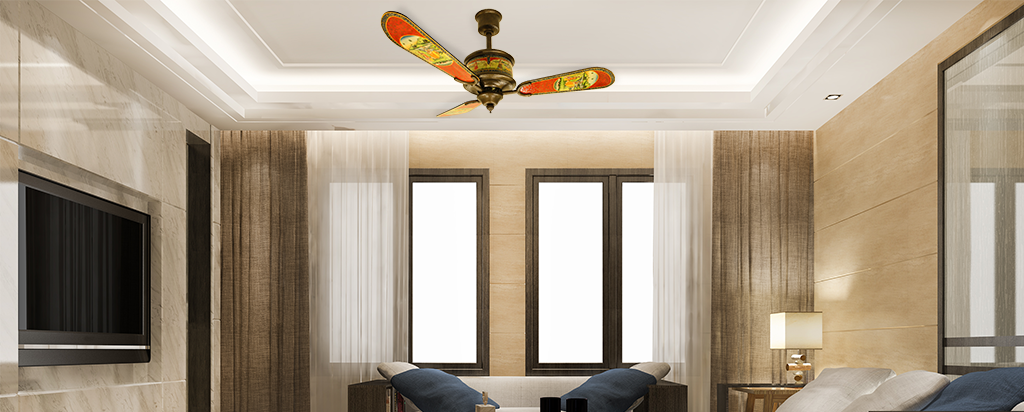
- Brass or antique-style details can complement traditional interiors.
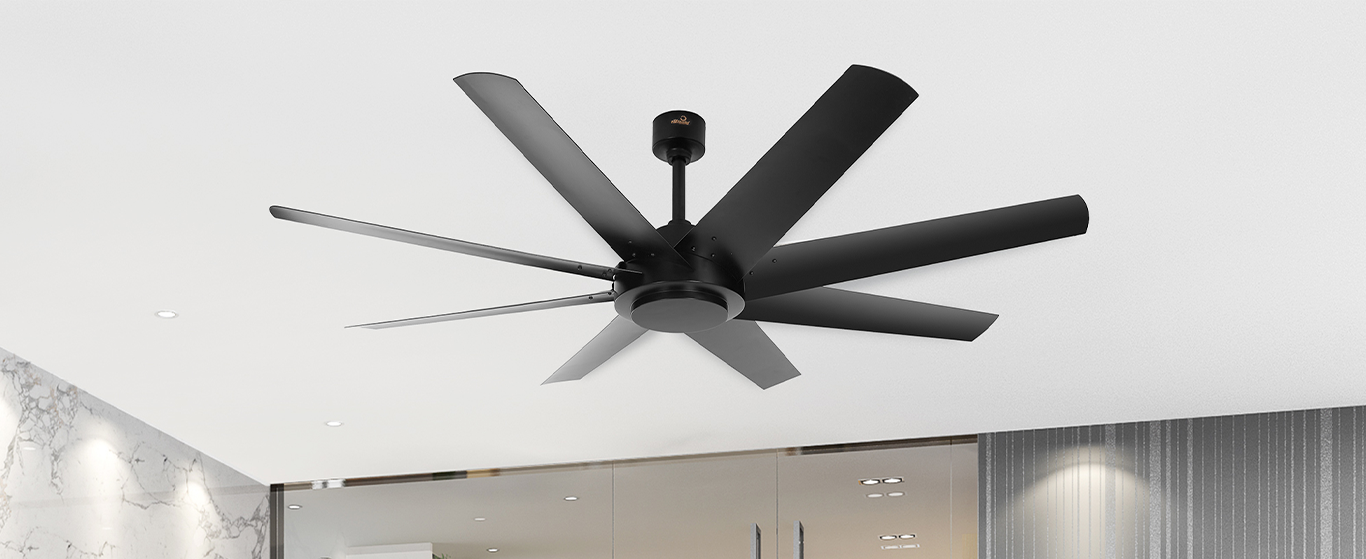
- Black or darker finishes can create a visual connection with contemporary furniture and lighting.
The finish should be considered alongside the fan’s existing design. Do not assume every model supports every rod finish.
4. Ceiling structure and installation
A longer rod needs proper structural support and compatible mounting hardware.
For sloped or angled ceilings, the mounting arrangement may also need an appropriate adapter. The fan must be secured to a suitable structural support, not simply attached to decorative ceiling material.
Hunter Fan+1
For installation, involve a qualified electrician and confirm the permitted rod length with the fan manufacturer.
What type of ceiling fan works best for different ceiling heights?
The down rod is only one part of the decision. The fan’s mounting style and overall design also matter.
Ceiling type | Fan option to consider | What to keep in mind |
9 ft ceiling | Standard ceiling fan | Maintain comfortable blade clearance |
10 to 12 ft ceiling | Down rod-mounted fan | Calculate the required hanging height |
13 to 15 ft ceiling | Extended down rod | Check structural support and proportions |
16 to 20 ft ceiling | Long or custom down rod | Plan installation and compatibility carefully |
Low ceiling | Hugger or low-profile fan | Avoid unnecessary hanging distance |
A hugger fan is designed to sit close to the ceiling rather than hanging from a conventional extended rod. You can explore The Fan Studio’s Hugger Fans collection if you are working with a lower ceiling or need a more compact mounting arrangement.
For rooms with traditional architectural details, you can also explore The Fan Studio’s Classical Fans collection.
One detail worth remembering: a double-height room does not automatically need the longest possible rod. The position of the fan in relation to the seating area, staircase, mezzanine and other architectural features should guide the decision.
How do you choose a down rod for a double-height ceiling or villa atrium?
A double-height ceiling fan installation needs more planning than a regular bedroom or living room installation.
Think about a villa with a double-height entrance or a living room that opens towards the first-floor gallery. Installing a fan in the centre of the ceiling may look symmetrical on the floor plan, but it may not be the best position for airflow or maintenance.
Consider the following:
- Installation position: Identify where people spend most of their time. The fan should serve the usable area rather than simply occupy the centre of the ceiling.
- Blade clearance: Check the distance from the floor, staircase, balcony edges and nearby architectural features.
- Rod stability: Confirm that the mounting system and rod are suitable for the selected fan and installation height.
- Maintenance access: Think about how the fan will be cleaned, serviced and inspected. A very high installation can make routine maintenance difficult.
For a villa atrium, it is also worth discussing the installation with your architect and electrician before the ceiling work is completed.
A little planning at this stage can prevent expensive changes later.
What are the common mistakes to avoid before ordering a custom down rod?
Before you finalise your fan and rod combination, check these points:
- Measuring from the unfinished floor or ceiling instead of the final finished surfaces.
- Selecting a rod using ceiling height alone, without checking the fan’s body dimensions.
- Ignoring minimum blade-to-floor and blade-to-wall clearances.
- Choosing a rod finish without considering the fan body and interior palette.
- Assuming that a longer rod will automatically improve airflow.
- Ordering a custom rod without confirming mounting compatibility and structural support.
One more practical tip: Ask your supplier for the complete installed height, measured from the finished ceiling to the bottom of the fan blades. This is more useful than knowing the rod length alone.
A practical example: Planning a ceiling fan for a villa living room
Imagine you are designing a villa with a 16 ft double-height living room.
The interiors feature dark wooden furniture, a large seating arrangement and warm lighting. You have shortlisted a designer ceiling fan, but the standard mounting arrangement leaves it too close to the ceiling.
Here is how you can approach the decision:
First, confirm the finished ceiling height. Next, check the distance between the fan’s rod connection and its blades. Then calculate the additional rod length required to position the blades at a suitable height.
Finally, discuss the rod finish and mounting compatibility with your fan supplier.
The result is a fan installation that considers airflow, safety and interior design together, rather than treating the down rod as an afterthought.
Frequently asked questions about ceiling fan down rod length
1. How long should a ceiling fan down rod be for a 12 ft ceiling?
For a 12 ft ceiling, an approximate 30 to 34-inch extension may be suitable when the fan assembly drops 8 to 12 inches and the target blade height is around 8.5 ft. The exact requirement depends on the fan model and its mounting dimensions.
2. Can I get a custom down rod for a 20 ft ceiling?
A longer or custom down rod may be required for a 20 ft ceiling. However, the rod must be compatible with the fan’s mounting system and approved for the installation. Consult the manufacturer and a qualified installer before ordering.
3. Does down rod length affect airflow?
Yes, mounting height can influence how effectively air circulates within a room. A fan positioned too close to the ceiling may have restricted airflow around its blades, while an excessively low installation may create clearance and safety concerns.
4. Can I customise the colour or finish of my ceiling fan rod?
Finish options depend on the fan model and available customisation options. If you want the rod to coordinate with your fan blades, motor housing or interior décor, discuss the available finishes with your supplier before placing an order.
5. How do I choose a fan for a double-height living room?
Start with the room dimensions, ceiling height and intended fan position. Then consider the blade span, mounting height, rod length and structural support. A professional installation assessment is particularly useful for villas and atriums.
A few things to remember before you decide
Choosing the right ceiling fan down rod length is a small detail that makes a considerable difference to the finished installation.
Whether you have a 9 ft bedroom ceiling, a 15 ft living room or a 20 ft villa atrium, the right approach is to calculate first and customise where necessary.
At The Fan Studio, we believe a ceiling fan should work with the space it belongs to. That means considering its design, finish, proportions and installation requirements together.
With handcrafted designer fans and customisation possibilities, you can plan a fan that complements your interiors without overlooking practical requirements.
Planning a ceiling fan for your home? Share your ceiling height, room dimensions and preferred fan design with our team. We can help you explore suitable options and discuss your requirements.
Visit The Fan Studio’s contact page to get in touch.