Why Do We Still Handcraft Fans? The Story Behind The Fan Studio
There is a question we hear quite often at The Fan Studio.
Why do you still handcraft fans?
It is a fair question.
We live in a time when almost everything can be made faster. Machines can produce hundreds of identical products, technology can make manufacturing more precise, and standardisation makes it possible to produce and distribute products at a much larger scale.
So why choose the slower way?
Why spend time working with wood, metal, finishes and details when a ceiling fan can simply be manufactured, packed and shipped?
For us, the answer is simple.
Because we never wanted to make just another fan.
We wanted to make something that people would notice.
Something that could work beautifully, perform reliably and still have a sense of character.
That thought has been at the heart of The Fan Studio since its journey began. The brand describes itself as a manufacturer of custom-made designer fans, handcrafted in India since 1999, with a focus on craftsmanship, customisation and the meeting point between traditional Indian artistry and modern design.
And perhaps that is the best place to begin this story.
What if a fan was more than a functional appliance?
For most of us, a ceiling fan is something we simply live with.
It is above the dining table. It is in the bedroom. It is in the living room. It is in offices, restaurants, hotels and almost every other kind of Indian space.
We notice it when it stops working.
We notice it when it makes noise.
We notice it when the room is too warm.
But we rarely notice it as a design element.
That was the idea The Fan Studio wanted to challenge.
Why should the fan be treated differently from everything else in an interior?
When someone is designing a room, they think carefully about the sofa, the lighting, the flooring, the walls, the artwork and even the smallest decorative details. Yet the fan, despite occupying a very visible position, is often selected almost as an afterthought.
The Fan Studio approached the category from a different direction.
What if the fan was considered as part of the interior from the beginning?
What if its material, finish, proportions and design could complement the room rather than simply sit above it?
That simple change in perspective opened up an entirely different world of designer ceiling fans.
Today, the brand’s collections include modern, classical, colonial and handcrafted designs, giving different spaces different ways of approaching the same everyday object.
And that is important.
Because the idea was never to make fans decorative just for the sake of being decorative.
A fan still has to be a fan.
It has to move air.
It has to perform.
It has to work.
The difference is that it can do all of that without looking like every other fan in the room.
The people behind the idea
Every brand has a story.
But behind a story are usually people who made a series of decisions that eventually shaped what the brand became.
For The Fan Studio, that story is closely connected with Shishir Kumar Sah, Chairman, and Prateek Sah, Managing Director. The brand’s own materials place them within the leadership that has carried forward its manufacturing heritage while developing a more design-led approach to fans.
The roots go back further than The Fan Studio itself.
The brand comes from the TULLU business house, whose journey began in 1958 with TULLU Water Pumps. That manufacturing legacy later expanded into domestic appliances under BOOTY, including fans. The Fan Studio emerged from this background with a very different ambition: to take something as familiar as a fan and rethink what it could be.
That connection between manufacturing experience and design thinking is important to the brand’s story.
Shishir Sah’s vision helped create the foundation for this shift — from simply manufacturing a functional product to exploring what happens when craftsmanship, design and personalisation become equally important parts of it.
Prateek Sah represents the continuing evolution of that thinking.
As expectations around interiors have changed, so has the way people look at products inside those spaces. Today, architects, interior designers, homeowners and hospitality brands are often looking for details that feel specific to a project rather than products that could belong anywhere.
That is where The Fan Studio’s focus on custom-made fans becomes particularly relevant.
The question is no longer only, “Which fan should I buy?”
It becomes, “What fan belongs in this space?”
And those are two very different questions.
Why does handcrafting still matter?
There is something about a handmade object that is difficult to explain through specifications alone.
You can describe its material.
You can describe its finish.
You can describe its size.
But those things do not completely explain the feeling of an object that has been worked on by hand.
That does not mean everything handmade is automatically better. It isn’t.
The value of craftsmanship comes from the attention given to the object while it is being made.
A surface is looked at more carefully.
A finish can be refined.
A material can be understood rather than simply processed.
A detail can be adjusted because someone noticed it.
That human involvement matters when the intention is to create something distinctive.
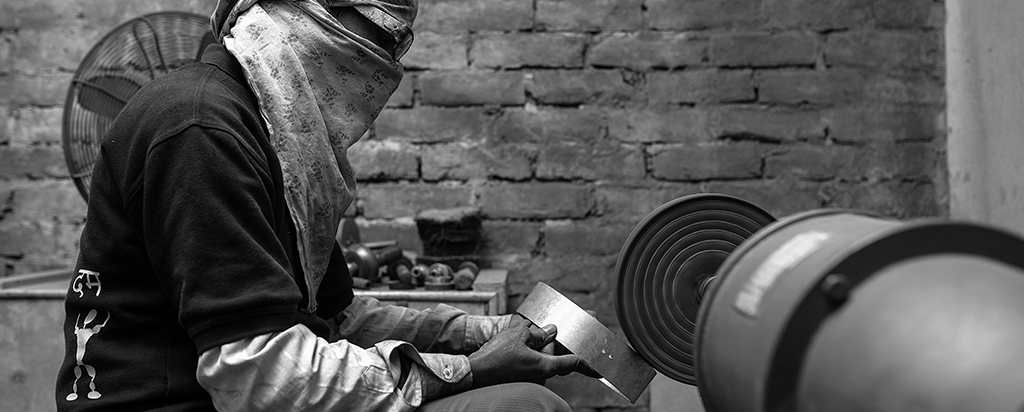
At The Fan Studio, the handcrafted approach is closely connected with its use of Indian artisanship, traditional techniques and detailed finishes. The brand describes its fans as being shaped by Indian artisans while combining traditional techniques with modern innovation and performance requirements.
This is also why handcrafted ceiling fans are not simply about appearance.
They are about the relationship between the maker, the material and the finished object.
And that relationship becomes even more interesting when the object itself is something as familiar as a ceiling fan.
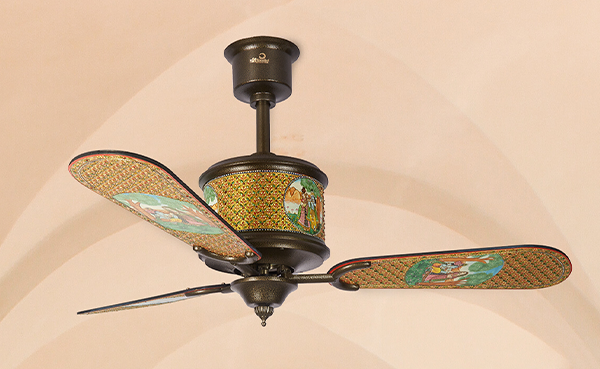
Indian craftsmanship deserves a place in modern interiors
India has never had a shortage of craftsmanship.
Wood carving, metalwork, hand painting, decorative arts and regional artistic traditions have existed for generations.
The challenge has always been finding ways to keep those traditions relevant.
Preserving a craft does not necessarily mean keeping it exactly where it was.
Sometimes it means finding a new canvas for it.
That is one of the ideas explored through The Fan Studio’s handcrafted collections.
Traditional artistic influences can become part of a functional product without making that product feel disconnected from contemporary life.
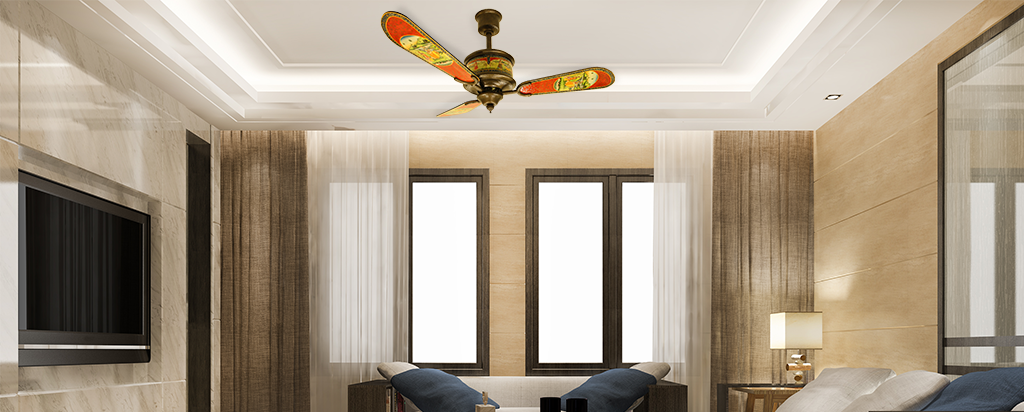
Take the brand’s Pichwai-inspired fan, for example. The design draws from Rajasthan’s Pichwai painting tradition and combines hand-painted artwork with modern fan engineering and customisation options.
That is an interesting combination.
The artwork belongs to a much older visual tradition.
The object performs a very modern function.
And the two can exist together.
This is where Indian craftsmanship becomes more than a decorative feature. It becomes part of the product’s identity.
For anyone interested in exploring this side of the brand, the Handcrafted Signature Collection is a natural next step. It brings together handcrafted designs, wooden and metal finishes and options for customisation.
A handcrafted fan does not have to look traditional
This is another misconception worth clearing up.
Handcrafted does not automatically mean ornate.
It does not have to mean vintage.
It does not have to look like something from another era.
Craftsmanship and contemporary design can exist together.
That is why The Fan Studio’s approach includes both heritage-inspired pieces and modern designer fans.
A contemporary interior might call for clean lines, restrained finishes and a fan that becomes part of the architecture without overpowering it.
A more traditional space might need richer detailing and a stronger visual presence.
A luxury residence might need something completely different from a hospitality project.
The point is not to make everything look handmade.
The point is to give the design enough flexibility to respond to the space.
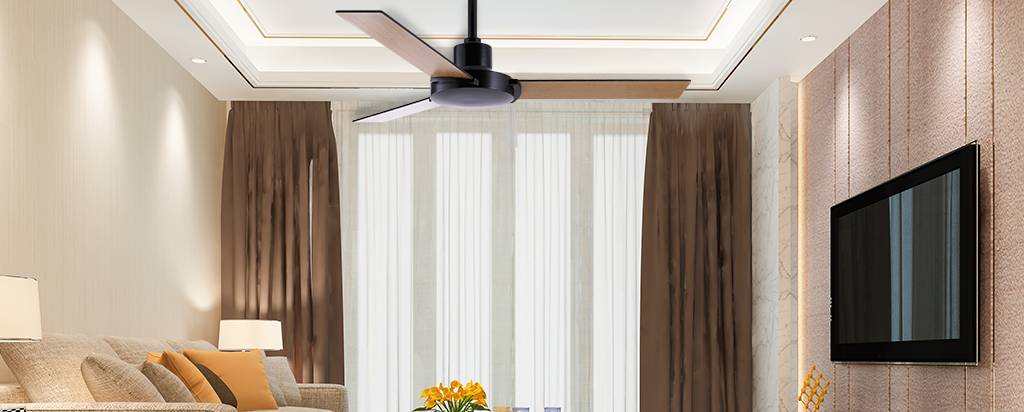
For contemporary interiors, The Fan Studio’s Modern Fans Collection includes designs across different forms and finishes, showing how the category can move well beyond the traditional idea of a ceiling fan.
This is where the philosophy becomes practical.
Craftsmanship gives the fan character.
Design gives it direction.
And the space gives it context.
Why customisation changes everything
Think about buying a standard piece of furniture.
You usually find something you like and then work around it.
Bespoke furniture works differently.
The space comes first.
The requirements come first.
The object is then created to fit those requirements.
The same thinking applies to customised ceiling fans.
A fan may need a particular finish because of the colour palette of the room. The blade material may need to complement existing furniture. The rod length may need to work with the ceiling height. The proportions may need to suit the scale of the room.
These are not merely aesthetic decisions.
They are part of making the product feel right within the space.
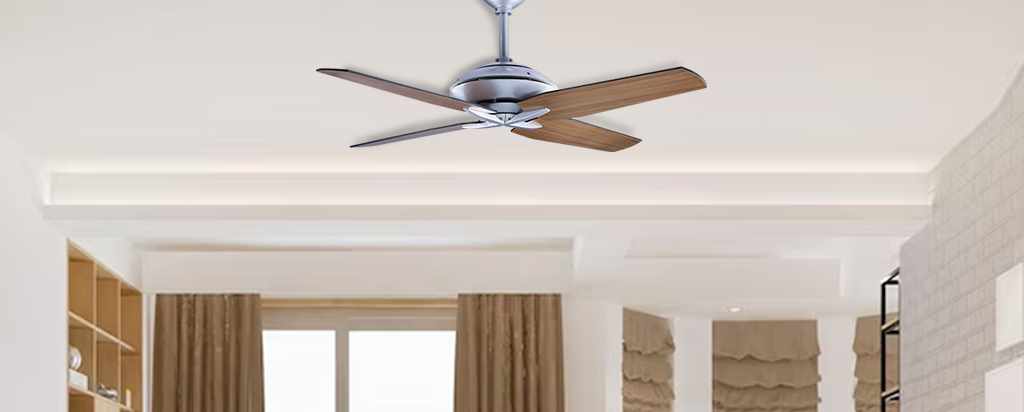
The Fan Studio offers customisation across finishes, materials, sizes and details, including options such as customised rod lengths and hand-polished wooden blade finishes.
Its earlier guide on customised designer ceiling fans also explores the different elements that can be considered when personalising a fan, including blade design, finish, motor, lighting and accessories.
This is why custom ceiling fans are particularly relevant to architects and interior designers.
The goal is not to offer endless choices for the sake of it.
The goal is to make the right choices possible.
When the fan becomes part of the architecture
A well-designed interior is usually about relationships.
The furniture relates to the architecture.
The lighting relates to the furniture.
Materials relate to the colour palette.
Details repeat themselves across the room.
A fan can become part of that same conversation.
Instead of asking the fan to disappear, a designer can choose to make it a subtle feature.
Or a statement.
Or something that simply feels so naturally integrated that you do not immediately notice where the design ends and the architecture begins.
This is why designer fans for interiors are becoming more interesting to architects and homeowners.
The fan is no longer being chosen only for its airflow.
It is being considered for its scale, finish, material and visual relationship with the room.
The Fan Studio has explored this idea in its own work around designer ceiling fans and interior design, where the fan is considered as part of the overall interior rather than an isolated appliance.
That shift may sound small.
It isn’t.
It changes the role of the fan completely.
The slower route can create a better story
This brings us back to the original question.
Why handcraft fans when they can be produced faster?
Because speed is not always the only measure of value.
There are products where consistency and scale are exactly what you want.
But there are also products where individuality matters.
A handcrafted fan belongs to the second category.
When a product is made with more attention to its materials, finish and details, it can feel less generic. And when it is customised for a particular space, it can become even more personal.
That is the space The Fan Studio has chosen to work in.
Not mass-produced sameness.
Not decoration without purpose.
But a combination of craftsmanship, design, performance and customisation.
It is also why the brand continues to work across different design languages rather than following a single trend.
Because trends change.
A room designed around today’s trend may look dated tomorrow.
Good proportions, good materials and thoughtful craftsmanship tend to have a longer life.
A fan can carry a little bit of history
There is another reason this matters.
When you bring craftsmanship into an everyday object, you are not only changing the object.
You are also creating a way for a tradition to continue.
An artisan’s skill does not remain confined to a workshop.
A traditional artistic influence does not remain only in a gallery.
It becomes part of something people use every day.
That is one of the most interesting things about The Fan Studio’s approach to heritage-inspired fans.
The past is not being copied simply for nostalgia.
It is being interpreted for contemporary spaces.
The result can be a fan that feels rooted in Indian craftsmanship while still belonging comfortably in a modern home, luxury hotel, villa or commercial space.
And perhaps that is what makes the idea of handcrafted design relevant today.
It is not about going backwards.
It is about carrying something forward.
So, why do we still handcraft fans?
Maybe the better question is: what do we gain by continuing to do it?
We gain the opportunity to pay attention.
We gain the freedom to customise.
We gain a way to bring Indian craftsmanship into contemporary interiors.
We gain the ability to make a familiar object feel less ordinary.
And, most importantly, we gain the possibility of creating something that feels like it belongs to a particular space rather than something that was simply installed there.
That is the philosophy behind The Fan Studio.
For Shishir Kumar Sah and Prateek Sah, the journey has been about taking a familiar category and looking at it differently — building on a manufacturing legacy while creating a more design-led approach to the humble ceiling fan. The brand’s current positioning brings together handcrafted luxury, Indian craftsmanship, customisation and modern innovation.
The result is not a rejection of modern manufacturing.
It is a balance between modern engineering and human craftsmanship.
Between heritage and contemporary design.
Between something functional and something personal.
Because, at the end of the day, a ceiling fan still has one very important job.
It needs to move air.
But there is no reason it cannot do that beautifully.
And perhaps that is why we still handcraft fans.
**Not because we cannot make them faster.
Because we believe some things are worth making with more thought.**
Explore More from The Fan Studio
If this story has made you look at the ceiling fan a little differently, these are the natural next places to explore:
- Handcrafted fans: Explore the Handcrafted Signature Collection for handcrafted designs, traditional influences and customisation possibilities.
- Modern designer fans: Browse the Modern Fans Collection for contemporary designs suited to modern interiors.
- Customised ceiling fans: Read Designer Customised Ceiling Fans from The Fan Studio to understand the different ways a fan can be personalised.
- Designer fans and interiors: Read The Role of Designer Ceiling Fans in Interior Design for more on how fans can become part of an interior concept.
- Custom ceiling fans for luxury spaces: Explore Custom Ceiling Fans in India: How Bespoke Designs Luxurise High-End Interiors for a more detailed look at customisation in luxury residential and hospitality spaces.
- The people and heritage behind the brand: Visit About The Fan Studio to learn more about the TULLU legacy, Shishir Kumar Sah, the brand’s manufacturing philosophy and its approach to Indian craftsmanship.