4 Latest Ceiling Fan Technologies You Should Know About
Walk into any well-designed home today and you’ll notice something interesting. Ceiling fans are no longer treated as background appliances. They’re chosen with the same attention as lighting, furniture, or artwork because they remain one of the few fixtures that stay in your line of sight every single day.
At the same time, what sits inside a ceiling fan has changed just as much as what you see outside. Motors have become quieter, controls have become smarter, and craftsmanship now goes hand in hand with engineering.
If you’ve been exploring Luxury Ceiling Fan Manufacturers in India, understanding these technologies will help you look beyond appearance and choose a fan that continues to perform well for years.
1. BLDC Motors: Quiet Efficiency That Makes a Difference Over Time
One of the biggest changes in ceiling fan technology is the shift from traditional induction motors to BLDC (Brushless Direct Current) motors.
At first glance, the difference may not seem dramatic. The fan spins, moves air, and looks much like any other model. The real advantage becomes noticeable after months of everyday use.
Unlike conventional motors, BLDC motors consume significantly less electricity while maintaining consistent airflow. Since ceiling fans often run for six to twelve hours a day—sometimes longer during Indian summers—even small reductions in power consumption can accumulate into meaningful savings over time.
Another detail homeowners rarely consider is heat generation. Efficient motors generate less internal heat, which reduces wear on components and contributes to quieter operation.
Many people expect instant savings on the first electricity bill. In reality, the financial benefit becomes much more noticeable after one or two cooling seasons, especially in homes where multiple fans operate daily.
For many Luxury Ceiling Fans, BLDC technology has become the standard rather than an optional upgrade.
2. Smart Controls Are About Everyday Convenience, Not Just Technology
People often associate smart ceiling fans with voice assistants or smartphone apps. While those features attract attention, they’re rarely the biggest reason homeowners appreciate them after installation.
The real benefit is control.
Imagine waking up in the middle of the night because the room feels colder than expected. Instead of getting out of bed, you simply reduce the fan speed using a remote or mobile app. Small conveniences like these quickly become part of daily life.
Many modern systems also include timers, scheduling, memory settings, and multiple speed profiles that suit different times of the day.
Another overlooked advantage is consistency. Family members often prefer different airflow levels, and programmable settings eliminate the need to readjust the fan every time someone enters the room.
Of course, smart features only add value when they remain simple to use. Complicated apps or unreliable connectivity can become frustrating, which is why experienced buyers usually pay attention to the quality of the control system rather than the number of advertised features.
Many Modern Ceiling Fans now balance digital convenience with intuitive operation instead of adding technology for its own sake.
3. Aerodynamic Blade Engineering Is Changing How Air Moves
People naturally compare fan speed, but speed alone doesn’t determine comfort.
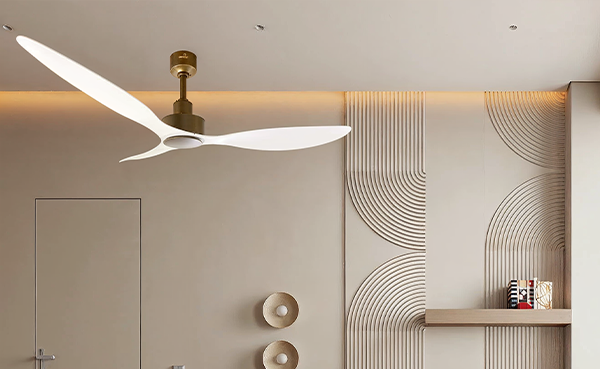
Blade design has become one of the most significant areas of innovation in recent years. Engineers now spend considerable time studying blade angles, curvature, width, and material to improve airflow efficiency rather than simply increasing motor power.
A well-designed blade moves air more evenly across a room. Instead of creating strong airflow directly underneath the fan, it distributes air over a wider area, making the room feel consistently comfortable.
This matters particularly in larger living rooms or open-plan spaces where uneven airflow often leads people to increase the speed unnecessarily.
An interesting observation from interior designers is that oversized decorative fans sometimes disappoint because buyers focus only on appearance. Attractive blades don’t automatically produce effective airflow. Their shape, pitch, and engineering play a much bigger role.
Many Designer Ceiling Fans combine sculptural aesthetics with carefully engineered blade profiles so visual appeal doesn’t come at the cost of performance.
4. Craftsmanship Meets Engineering Through Advanced Materials
Luxury isn’t defined only by expensive finishes.
The materials used in a ceiling fan directly influence its durability, balance, noise levels, and long-term appearance.
Modern manufacturing techniques now allow natural wood, engineered composites, precision metals, and handcrafted elements to work together without compromising performance.
For example, advances in balancing technology help reduce wobbling, one of the most common complaints homeowners develop years after installation. Better material consistency also helps blades retain their shape in varying humidity levels, which is especially relevant in many parts of India.
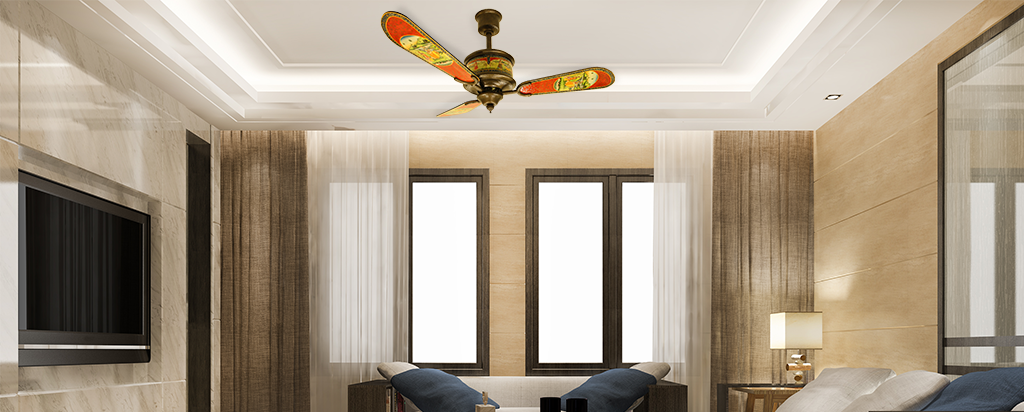
This is where Handcrafted Ceiling Fans stand apart. While the craftsmanship creates their visual identity, the engineering behind the construction determines whether they continue operating smoothly over time.
Many buyers assume handcrafted automatically means delicate. In reality, well-made handcrafted fans are built to balance artistry with structural stability, provided they’re manufactured using high-quality production standards.
Is Customisation Worth Considering?
Increasingly, homeowners want their ceiling fans to match the rest of their interiors instead of adapting the room around a standard design.
That’s why Customised Ceiling Fans have gained popularity across luxury residences, boutique hotels, and architect-designed homes.
Customisation extends beyond colour choices. Depending on the manufacturer, buyers may be able to select blade finishes, materials, dimensions, motor colours, lighting integration, and even decorative detailing.
However, customisation works best when it begins with the room’s function.
A double-height living room has different airflow requirements than a compact bedroom. Likewise, a fan chosen primarily for visual impact shouldn’t compromise comfort simply to achieve a particular aesthetic.
Experienced interior designers usually treat ceiling fans as part of the overall architectural plan rather than adding them after every other design decision has been made.
Looking Beyond Specifications
Product specifications tell you how a fan performs under testing conditions. They don’t always tell you how it feels to live with every day.
A fan that starts quietly, maintains stable airflow, responds instantly to controls, and blends naturally into the room often leaves a stronger impression than one with the longest list of technical features.
This is why many buyers researching Luxury Ceiling Fan Manufacturers in India spend time understanding engineering as much as aesthetics.
Brands like The Fan Studio reflect this shift by combining thoughtful craftsmanship, customisation, and contemporary technology to create fans that complement carefully designed interiors rather than simply occupying ceiling space.
The next time you compare ceiling fans, look beyond the finish or the speed settings. The technologies you don’t immediately notice are often the ones that shape your everyday comfort long after the installation is complete.