Mysore Kalam, Tanjore, Pichwai or Sanganeri? How to Choose the Right Indian Art Form for a Hand-Painted Fan
The short answer: The right hand-painted ceiling fan depends on your room’s mood, colours, and purpose. Choose Mysore Kalam for delicate detailing, Tanjore for rich colours and traditional ornamentation, Pichwai for devotional and nature-inspired imagery, Sanganeri for floral patterns, and Patra Chitra for detailed narrative art. The best choice is the one that complements your décor without competing with it.
Introduction
Imagine choosing a ceiling fan for a living room you’ve spent months designing. The furniture is in place, the lighting feels right, and the colour palette is carefully planned. But a standard ceiling fan feels out of place. You want something more personal, perhaps a piece of Indian art that also serves a practical purpose.
That’s where a hand-painted ceiling fan can make a difference. But with Indian art forms such as Mysore Kalam, Tanjore, Pichwai, Sanganeri and Patra Chitra, choosing one is not always straightforward.
Each has its own visual language, colours and detailing. Let’s explore what sets them apart and how to choose the right art form for your home.
Which Indian art form should you choose for your hand-painted ceiling fan?
The easiest way to decide is to look at the visual character of each art form. Some feel detailed and devotional, while others are lighter, more floral or more decorative.
Let’s look at the five styles individually.
1. Mysore Kalam: For delicate detailing and understated elegance
Mysore Kalam is a traditional South Indian painting style associated with Karnataka and the royal patronage of the Wodeyar dynasty. It is recognised for fine brushwork, graceful figures, intricate outlines and restrained gold detailing.
On a fan, this style works well when you appreciate detail but don’t want the artwork to dominate the room. Think of a living room with warm wooden furniture, antique brass accents, muted walls and traditional furnishings.
Best suited for:
- Living rooms with classic or transitional décor.
- Spaces with wooden furniture and warm metallic accents.
- Homeowners who prefer detailed artwork over bold patterns.
Practical tip: Look at the blade artwork alongside the ceiling colour and lighting. Mysore-style detailing is easier to appreciate when the fan is not visually competing with several other ornate elements.
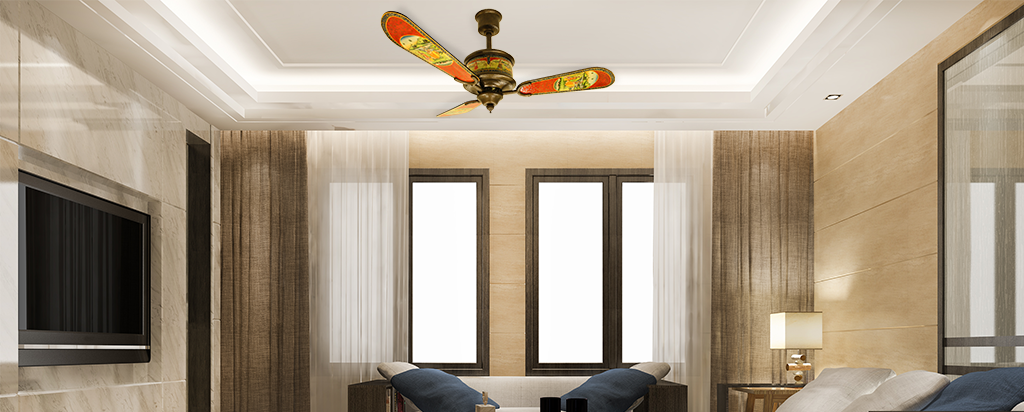
The Fan Studio’s Monarch Mysore Kalam Art is part of its Handcrafted Signature collection. Its listed default finish combines an antique bronze body with Mysore Kalam-painted blades.
2. Tanjore: For rich colours and a traditional statement
Tanjore painting, also known as Thanjavur painting, is a classical art form from Tamil Nadu. Its recognisable features include vibrant colours, prominent central figures, raised ornamentation and gold foil detailing. Traditional compositions often depict Hindu deities and saints.
If your interiors feature carved wooden furniture, traditional lighting, rich fabrics or heritage-inspired details, Tanjore artwork can feel like a natural extension of the room.
Best suited for:
- Traditional living rooms and formal drawing rooms.
- Pooja areas and devotional interiors.
- Spaces with rich wood, warm lighting and gold accents.
Practical tip: Tanjore-inspired artwork can have a strong visual presence. If your room already has elaborate wall art or decorative furniture, consider a more restrained colour palette for the fan.
The Fan Studio offers the Monarch Tanjore within its Handcrafted Signature collection, giving buyers an option to explore this traditional visual style in a ceiling fan.
3. Pichwai: For devotional themes and nature-inspired beauty
Pichwai art originated in Nathdwara, Rajasthan, and is closely associated with the worship of Shreenathji, a form of Lord Krishna. Traditional Pichwai paintings feature cows, lotus ponds, flowers, festivals and scenes from Krishna’s life.
What makes Pichwai interesting for interiors is its combination of devotional imagery and natural elements. The artwork can introduce colour and detail without relying entirely on geometric or abstract patterns.
Best suited for:
- Pooja rooms and prayer areas.
- Living rooms with Indian-inspired décor.
- Interiors featuring botanical motifs, natural materials and earthy colours.
Practical tip: Look at the dominant colours in your existing décor. If your room has neutral walls and natural wood, a Pichwai-inspired design can introduce colour. If the room is already colourful, choose artwork with a more balanced composition.
The Fan Studio’s Pichwai ceiling fan brings this traditional artistic influence into its Handcrafted Signature collection.
4. Sanganeri: For floral patterns and a lighter visual feel
Sanganeri printing is a traditional textile-printing craft from Sanganer, near Jaipur, Rajasthan. It is known for delicate floral motifs, leaves, vines and nature-inspired patterns, often arranged on white or light-coloured backgrounds.
Unlike the devotional compositions of Pichwai or the ornate detailing of Tanjore, Sanganeri designs often have a lighter, more repetitive pattern. This makes them a useful choice if you want Indian craftsmanship without a heavily traditional look.
Best suited for:
- Bedrooms and relaxed living spaces.
- Light-coloured and pastel interiors.
- Homes with floral upholstery, botanical décor or subtle traditional accents.
Practical tip: If your room already has printed cushions, curtains or rugs, check whether the fan’s floral motifs complement those patterns. Similar colours can create continuity, but too many competing prints can make the ceiling look busy.
The Fan Studio includes Shalimar Sanganeri Leaf in its Handcrafted Signature collection, bringing this floral design influence to a handcrafted ceiling fan.
5. Patra Chitra: For detailed storytelling and folk-art character
Patra Chitra, commonly written as Pattachitra when referring to the Odisha tradition, is a traditional Indian painting style known for intricate lines, strong colours, decorative borders and mythological or folk narratives. Krishna Leela and Lord Jagannath are among its traditional subjects.
It is a good option if you enjoy artwork that has a story behind it. The detailed borders and carefully composed figures give this style a distinct identity.
Best suited for:
- Heritage-inspired homes.
- Spaces with handcrafted furniture and traditional artwork.
- Interiors where folk art and cultural details are already part of the design.
Practical tip: Pay attention to the amount of detail in the rest of the room. Patra Chitra-inspired artwork can become a focal point, so give it enough visual space.
The Fan Studio’s Monarch Patra Chitra features hand-painted wooden blades and an antique black body as its listed default finish.
The Fan Studio
How do the five art styles compare?
If you’re still deciding, this table gives you a quick way to narrow down your options.
Art form | Visual character | Best suited for | What to watch |
Mysore Kalam | Fine lines, delicate detailing, gold accents | Classic and understated interiors | Avoid excessive competing details |
Tanjore | Rich colours, ornate ornamentation, gold detailing | Traditional and devotional spaces | Can feel visually dominant |
Pichwai | Krishna motifs, cows, lotus flowers and nature | Pooja areas and Indian-inspired homes | Match the artwork’s colours to the room |
Sanganeri | Fine floral and botanical patterns | Light, relaxed and contemporary interiors | Coordinate with existing prints |
Patra Chitra | Narrative figures, decorative borders and bold colours | Heritage and folk-art-inspired interiors | Allow the artwork to stand out |
A simple decision rule: Choose Mysore Kalam for refinement, Tanjore for richness, Pichwai for devotional imagery, Sanganeri for floral patterns, and Patra Chitra for storytelling.
How do you match a hand-painted fan to your room?
Choosing an art form is only half the decision. You also need to think about how the fan will look once installed.
Here are four things to consider:
- Wall colour: Light walls can accommodate richer artwork, while darker walls may benefit from a carefully balanced colour palette.
- Furniture: Match the fan’s visual character to your furniture. Antique wood and brass generally complement traditional art, while lighter furniture can work well with floral designs.
- Existing artwork: If your walls already have elaborate paintings, consider a less visually busy fan.
- Room purpose: A Pichwai-inspired fan may feel appropriate in a pooja area, while Sanganeri floral patterns may suit a relaxed bedroom.
Also consider the fan’s physical specifications. A down rod is the pipe connecting the fan to the ceiling. Its length affects how low the fan hangs, so ceiling height and installation requirements should be considered before finalising the design.
Explore handcrafted Indian art through The Fan Studio
The Fan Studio’s Handcrafted Signature collection brings together different Indian artistic influences in handcrafted ceiling fan designs.
If you’re interested in seeing how traditional craftsmanship translates into interior décor, our guide to five handcrafted royal ceiling fans is another useful starting point.
The right design should reflect your taste, suit your room and work as a functional ceiling fan. Take time to compare the artwork, finishes, dimensions and available customisation options before making a decision.
Frequently asked questions
1. Which Indian art form is best for a hand-painted ceiling fan?
There is no single best option. Mysore Kalam suits delicate detailing, Tanjore suits ornate traditional interiors, Pichwai works well for devotional themes, Sanganeri suits floral décor, and Patra Chitra appeals to those who enjoy detailed folk art.
2. Can I get a Pichwai ceiling fan in India?
Yes. The Fan Studio offers a Pichwai-inspired ceiling fan as part of its Handcrafted Signature collection. You can explore the design and enquire about available options directly with the brand.
3. Is a hand-painted ceiling fan suitable for a modern home?
Yes. Traditional Indian artwork can complement modern interiors when its colours and detailing are coordinated with the furniture, walls and lighting. Floral Sanganeri-inspired patterns and restrained Mysore Kalam detailing are worth considering.
4. Can I customise the colours and finish of a hand-painted fan?
The Fan Studio lists customisable colour palettes and motor housing finishes on selected Handcrafted Signature models. The available options depend on the particular model. Check with the team before placing an order.
5. What should I consider before buying an Indian art-inspired ceiling fan?
Consider the artwork, room colour palette, furniture, fan size, ceiling height and functional specifications. Also ask whether the artwork uses traditional techniques or is inspired by a particular art form. This helps you understand exactly what you are purchasing.
Closing: Let your ceiling tell a story
A ceiling fan doesn’t always have to be an ordinary functional fixture. It can also reflect your appreciation for Indian art and craftsmanship.
Whether you prefer the fine detailing of Mysore Kalam, the richness of Tanjore, the devotional character of Pichwai, the floral patterns of Sanganeri or the storytelling of Patra Chitra, choose a design that feels right for your home.
Explore the Handcrafted Signature collection by The Fan Studio and speak to our team about finding an art-inspired ceiling fan that suits your space.