The TULLU Legacy Behind The Fan Studio: How a 1958 Business House Came to Handcraft Fans
The Fan Studio TULLU legacy begins with a business house established in 1958, built around Indian engineering and manufacturing. The Fan Studio carries this heritage into designer ceiling fans, with handcrafted fans since 1999. Today, it brings together Indian craftsmanship, design-led thinking and customisation for homes and hospitality spaces.
Introduction
When you invest in a handcrafted ceiling fan, you are choosing more than something that moves air. You are also trusting the people behind its design, materials and manufacturing.
But how do you know who actually makes the fan? Where does the brand come from? And does its history tell you anything about the way it approaches craftsmanship today?
These are fair questions, particularly when you are selecting fans for a luxury home, villa or hospitality project. The story of The Fan Studio offers an interesting answer. Its roots go back to the TULLU business house of 1958, long before handcrafted designer fans became its focus.
What is the TULLU legacy behind The Fan Studio?
The TULLU legacy is rooted in an Indian manufacturing business established in 1958 by the late Shri Vijay Kumar Sah. The business began with TULLU Water Pumps, with a focus on developing products suited to the needs of Indian households.
According to the company’s history, TULLU Water Pumps helped ease the burden of carrying water for millions of Indians. Over time, the brand became closely associated with the water pump category in India.
This history matters because it provides context for the kind of business The Fan Studio comes from. Its roots are not in a short-lived design trend or a business created solely around luxury décor. They come from a manufacturing background built over decades.
The next chapter came when Mr Shishir Kumar Sah developed another venture, TULLU Domestic Appliances. Its product range included grinders, mixers, exhaust fans, coolers, table fans and standard ceiling fans, marketed under the BOOTY brand.
This progression connected the business house with a wider range of household products, including fans.
For readers researching TULLU Group fans, this distinction is useful: the TULLU business house provides the heritage, while The Fan Studio represents its design-led handcrafted fan venture.
Who makes The Fan Studio fans, and when did the journey begin?
The Fan Studio has been making handcrafted fans since 1999, according to its official brand history. It describes itself as a manufacturer of custom-made designer fans, with a focus on Indian craftsmanship and detailed finishing.
So, who makes The Fan Studio fans? They are created through a manufacturing and design process supported by the company’s team and Indian artisans.
The distinction between a manufacturer’s heritage and a product’s history is worth understanding. The TULLU business house dates back to 1958, while The Fan Studio’s handcrafted fan journey is associated with 1999. These are two separate milestones, and both contribute to the brand’s story.
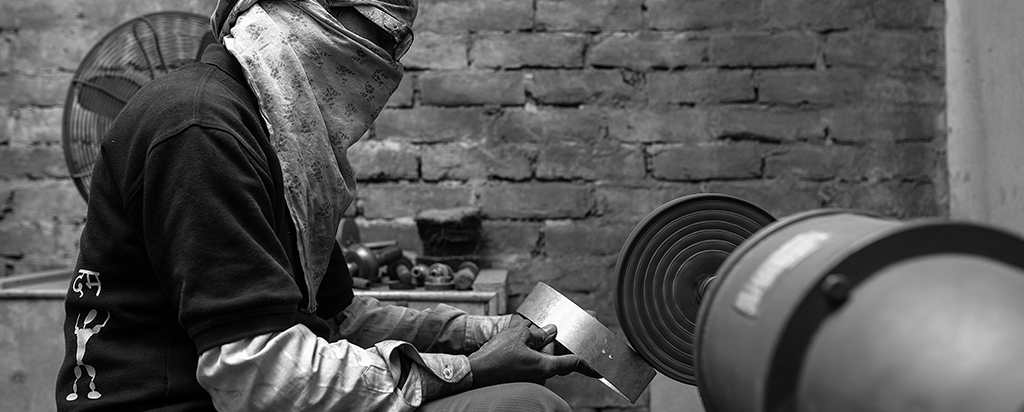
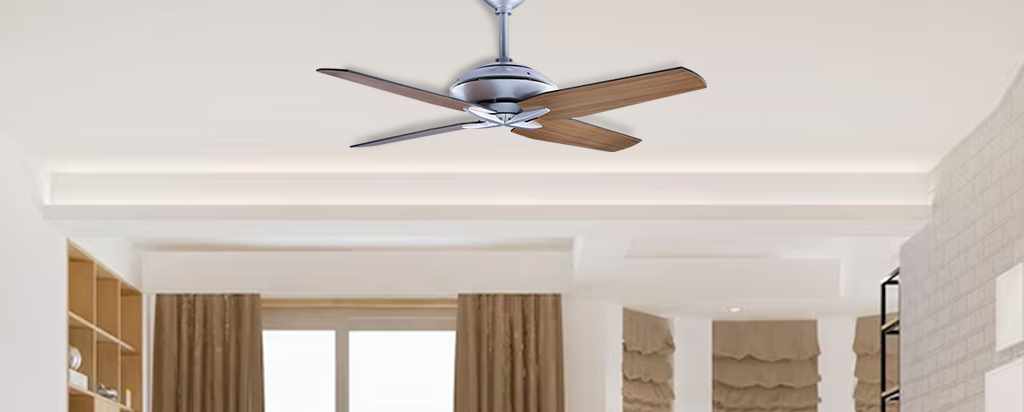
The company also highlights its manufacturing capabilities, including hand-polished wooden blades that can be customised to the customer’s preferred polish.
If you want to understand how this translates into actual products, explore the Handcrafted Signature Fans collection.
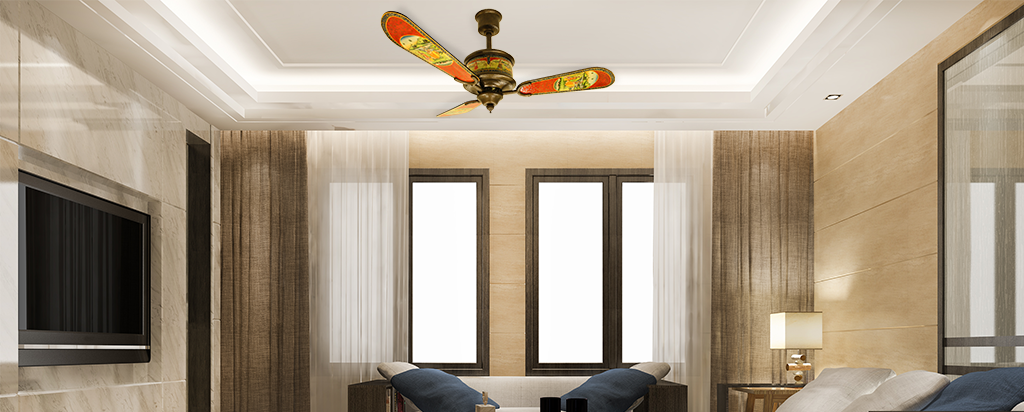
It includes designs such as Monarch Handpainted, Monarch Tanjore, Monarch Mysore Kalam Art, Pichwai and Shalimar Handpainted. Each design brings a different artistic language to the ceiling.
What makes an Indian luxury fan manufacturer different?
An Indian luxury fan manufacturer needs to understand two things: how a fan performs and how it fits into a designed space.
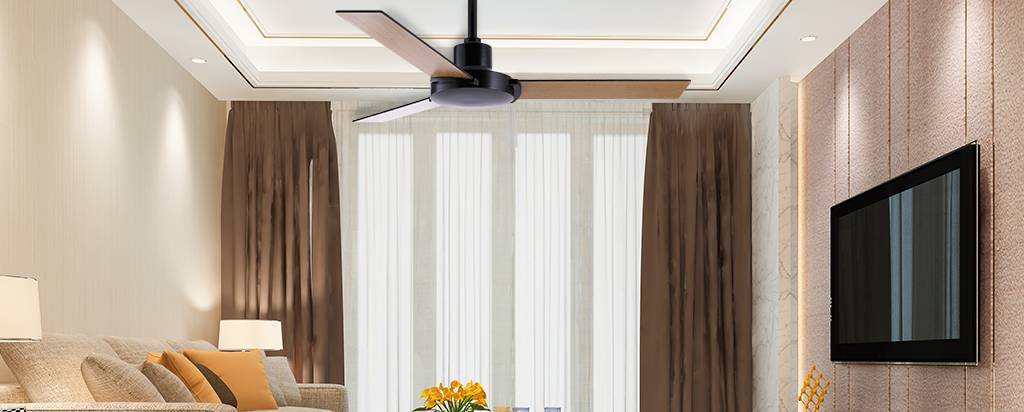
A ceiling fan is a functional appliance, but in a thoughtfully designed room, it is also a visible part of the interior. Its proportions, blade material, finish and overall appearance can influence how the ceiling looks.
The Fan Studio brings these considerations together through its focus on handcrafted and customised designs.
Its official website highlights several manufacturing details:
- Heavy-duty metal and aluminium body construction.
- Thick metal blades.
- Hand-polished wooden blades with customisable polish.
- Rubber-sealed double ball bearings.
- Insulation and capacitor specifications.
- Blade pitch designed with air delivery in mind.
These details matter because craftsmanship should not be judged by appearance alone. A beautifully finished fan still needs to perform its everyday function.
Quick tip: When comparing premium fans, ask about the motor, blade construction, air delivery, maintenance requirements and finish options. Do not make the decision based only on photographs.
How does made-in-India craftsmanship influence designer fans?
Made in India designer fans bring together local manufacturing capabilities and the country’s diverse artistic traditions.
India has a long history of regional decorative art forms. Tanjore painting, Pichwai and Kalamkari-related traditions, for example, use distinctive motifs, colours and detailing. When artistic influences are adapted for contemporary products, they can create a connection between traditional art and modern interiors.
The Fan Studio’s Handcrafted Signature collection reflects this approach through designs inspired by different Indian art traditions.
Here is a simple way to understand the design possibilities:
Design approach | What it brings to a space | Best suited to |
Hand-polished wooden blades | Natural grain and a warm finish | Wooden, earthy and contemporary interiors |
Hand-painted designs | Individual patterns and artistic detail | Feature ceilings and statement rooms |
Tanjore-inspired designs | Traditional decorative influence | Classic and heritage-inspired interiors |
Pichwai-inspired designs | Detailed motifs and cultural character | Artistic and eclectic spaces |
Customised finishes | Greater control over the final appearance | Architect-led and bespoke projects |
The choice should depend on the room, not simply the popularity of a particular art form.
For example, a room with patterned wallpaper and elaborate furniture may benefit from a more restrained fan finish. A minimal room, on the other hand, can accommodate a more decorative design.
You can also take a virtual tour of The Fan Studio showroom to get a better sense of its product presentation.
Why does a manufacturer’s heritage matter when choosing a luxury fan?
A manufacturer’s history can tell you something about its experience, but it should never be the only reason you choose a product.
For homeowners, architects and hospitality buyers, the more useful question is whether the manufacturer can understand and execute the requirements of a particular project.
Consider three things:
- Manufacturing knowledge
A company with a manufacturing background may have experience across materials, product construction and production processes. However, you should still evaluate the specifications of the individual fan.
- Customisation capabilities
A bespoke fan should work with your interior rather than force you to compromise on the design. Ask whether the blade material, finish, colour and decorative details can be adapted to your requirements.
- Project experience
Hospitality spaces, villas and private residences have different needs. A fan selected for a boutique hotel may need to complement a particular architectural style, while a residential bedroom may prioritise quieter operation and a suitable visual finish.
The Fan Studio features hospitality and residential projects on its clients page. This gives prospective buyers an opportunity to explore the kinds of spaces associated with its work.
What does this legacy mean for a homeowner or architect?
Imagine a family designing a villa. They have selected natural stone flooring, wooden furniture and carefully chosen lighting. The ceiling, however, still has a standard white fan that does not quite fit the room.
They begin looking for a customised option.
Instead of choosing a fan based only on its colour, they consider the blade finish, decorative details, room proportions and practical performance. They may prefer hand-polished wood for one room and a hand-painted design for a more decorative living area.
This is where a manufacturer with both engineering and design experience becomes relevant.
The TULLU business house heritage provides the historical manufacturing context. The Fan Studio’s handcrafted approach brings that background into the world of designer ceiling fans.
It is also why the company positions itself as a source of Made-In-India designer fans, rather than treating a ceiling fan as just another household appliance.
The wider idea is simple: a well-chosen fan should make sense both when it is switched on and when you look up at it.
Common mistakes to avoid when choosing a handcrafted fan
Before selecting a designer ceiling fan, keep these points in mind:
- Choosing only by appearance: Check the technical specifications and air delivery as well as the finish.
- Ignoring ceiling height: Consider the fan’s installation height and whether a suitable down rod is required. A down rod is the pipe connecting the fan to the ceiling mount.
- Overlooking room proportions: A fan should be appropriately sized for the room and its layout.
- Mixing too many decorative elements: A detailed hand-painted fan may not work with an already busy ceiling.
- Assuming every design can be customised identically: Confirm the available options for the particular model.
- Not discussing maintenance: Ask how the selected finish should be cleaned and maintained.
A little planning before ordering can prevent avoidable design and installation issues.
Key takeaways
- The TULLU business house traces its roots to 1958, with its beginnings in TULLU Water Pumps.
- The Fan Studio’s handcrafted fan journey dates back to 1999.
- Its product range combines Indian craftsmanship, decorative influences and customised design options.
- A good designer fan should balance aesthetics, construction and everyday performance.
Frequently asked questions
1. What is the history of The Fan Studio?
The Fan Studio comes from the TULLU business house, whose roots date back to 1958. The business was founded by the late Shri Vijay Kumar Sah and initially focused on TULLU Water Pumps. The Fan Studio’s handcrafted fan journey began in 1999.
2. Is The Fan Studio part of the TULLU business house?
Yes. The Fan Studio is part of the TULLU business house, which has a manufacturing history dating back to 1958. Its heritage connects Indian manufacturing experience with designer ceiling fan production.
3. Since when has The Fan Studio been making handcrafted fans?
The Fan Studio states that it has been manufacturing handcrafted fans since 1999. Its range includes handcrafted, hand-painted and customised designer ceiling fans.
4. Are The Fan Studio fans made in India?
Yes. The Fan Studio identifies its fans as 100% made in India. Its manufacturing approach combines Indian craftsmanship with contemporary fan designs and customisation options.
5. Can I get a customised handcrafted ceiling fan in India?
Yes. The Fan Studio offers customisation across finishes, materials, sizes and design details. The available options may vary by model, so it is best to discuss your requirements with the team before finalising your selection.